surfepro_728x90

onclicka_banner_2

uiadportio_728x90

multiwall_728x90

a-ads_728x90

Search This Blog

Popular Posts

Wednesday, May 21, 2025

The Wi-Fi Symbol: Unraveling the Mystery Behind the Iconic Logo


In today’s digital age, Wi-Fi has become an essential part of our daily lives. We use it to connect to the internet, communicate with others, and access a vast array of information. But have you ever stopped to think about the symbol that represents Wi-Fi? You know, the one that appears on your phone, laptop, or router when you’re connected to a network. In this article, we’ll delve into the history and meaning behind the Wi-Fi symbol, exploring its origins, design, and significance.

A Brief History of Wi-Fi

Before we dive into the symbol itself, let’s take a brief look at the history of Wi-Fi. Wi-Fi, short for Wireless Fidelity, is a technology that allows devices to connect to the internet without the use of cables or wires. The first Wi-Fi standard was developed in the late 1990s by the IEEE (Institute of Electrical and Electronics Engineers), and it was initially called IEEE 802.11.

The first Wi-Fi devices were released in the early 2000s, and they quickly gained popularity as a convenient and efficient way to access the internet. Today, Wi-Fi is used by billions of people around the world, and it’s an essential feature in many devices, including smartphones, laptops, and smart home devices.

The Origins of the Wi-Fi Symbol

So, where did the Wi-Fi symbol come from? The symbol was designed by the Wi-Fi Alliance, a non-profit organization that promotes and certifies Wi-Fi technology. The alliance was formed in 1999, and it was tasked with creating a logo that would represent Wi-Fi and distinguish it from other wireless technologies.

The design of the Wi-Fi symbol was inspired by the Greek letter “omega” (Ω), which represents the concept of infinity. The symbol is also reminiscent of a wave, which represents the wireless nature of Wi-Fi. The Wi-Fi Alliance wanted a symbol that would be simple, yet distinctive, and that would convey the idea of wireless connectivity.

The Design of the Wi-Fi Symbol

The Wi-Fi symbol is a stylized representation of the Greek letter “omega.” It consists of four curved lines that form a circular shape, with the top line being slightly thicker than the others. The symbol is often displayed in a blue color, although it can be displayed in other colors as well.

The design of the Wi-Fi symbol is meant to be simple and intuitive, making it easy to recognize and understand. The symbol is also scalable, meaning that it can be displayed in a variety of sizes without losing its clarity or legibility.

The Meaning Behind the Wi-Fi Symbol

So, what does the Wi-Fi symbol mean? On a basic level, the symbol indicates that a device is connected to a Wi-Fi network. When you see the symbol on your phone or laptop, it means that you’re connected to the internet and can access online content.

On a deeper level, the Wi-Fi symbol represents the idea of wireless connectivity and the freedom that comes with it. Wi-Fi allows us to connect to the internet from anywhere, at any time, without being tied to a physical cable. This freedom has revolutionized the way we live, work, and communicate, and the Wi-Fi symbol has become an iconic representation of this freedom.

The Significance of the Wi-Fi Symbol

The Wi-Fi symbol is more than just a logo – it’s a symbol of our connected world. It represents the idea that we’re all connected, and that we can access information and communicate with each other from anywhere.

The Wi-Fi symbol has also become a cultural icon, appearing in art, design, and popular culture. It’s been used in advertising, fashion, and even tattoos, and it’s become a recognizable symbol around the world.

The Evolution of the Wi-Fi Symbol

Over the years, the Wi-Fi symbol has undergone several changes and updates. In 2009, the Wi-Fi Alliance introduced a new logo that featured a more stylized and modern design. The new logo was designed to be more scalable and versatile, making it easier to display on a variety of devices and platforms.

In 2019, the Wi-Fi Alliance introduced a new certification program called Wi-Fi 6, which features a new logo and branding. The Wi-Fi 6 logo is designed to represent the latest generation of Wi-Fi technology, which offers faster speeds and greater capacity.

The Future of the Wi-Fi Symbol

As Wi-Fi technology continues to evolve, it’s likely that the Wi-Fi symbol will undergo further changes and updates. The Wi-Fi Alliance is constantly working to improve and expand Wi-Fi technology, and the symbol will likely reflect these changes.

In the future, we may see new variations of the Wi-Fi symbol that represent different types of Wi-Fi networks or technologies. We may also see the symbol being used in new and innovative ways, such as in augmented reality or virtual reality applications.

Conclusion

In conclusion, the Wi-Fi symbol is more than just a logo – it’s a symbol of our connected world and the freedom that comes with it. The symbol has a rich history and meaning, and it’s become an iconic representation of Wi-Fi technology.

As Wi-Fi continues to evolve and improve, it’s likely that the symbol will undergo further changes and updates. But for now, the Wi-Fi symbol remains an essential part of our digital lives, representing the idea of wireless connectivity and the freedom to access information and communicate with others from anywhere.

YearEventDescription
1999Formation of the Wi-Fi AllianceThe Wi-Fi Alliance was formed to promote and certify Wi-Fi technology.
2000sRelease of the first Wi-Fi devicesThe first Wi-Fi devices were released, marking the beginning of the Wi-Fi era.
2009Introduction of the new Wi-Fi logoThe Wi-Fi Alliance introduced a new logo that featured a more stylized and modern design.
2019Introduction of Wi-Fi 6The Wi-Fi Alliance introduced a new certification program called Wi-Fi 6, which features a new logo and branding.

The Wi-Fi symbol is a ubiquitous part of our digital lives, and its meaning and significance extend far beyond its simple design. Whether you’re a tech enthusiast or just a casual user, the Wi-Fi symbol is an essential part of your online experience.

What is the Wi-Fi symbol and where did it originate?

The Wi-Fi symbol is a stylized representation of the Greek letter Hertz, which is used to represent frequency. It was created by the Wi-Fi Alliance, a non-profit organization that promotes and certifies Wi-Fi technology. The symbol was designed to be simple, recognizable, and easy to use in a variety of contexts.

The Wi-Fi symbol has become ubiquitous in modern life, appearing on devices, packaging, and marketing materials. It is often used to indicate that a device or network is Wi-Fi enabled, and it has become a widely recognized symbol of wireless connectivity. Despite its widespread use, the Wi-Fi symbol remains a trademark of the Wi-Fi Alliance, and its use is subject to certain guidelines and restrictions.

What does the Wi-Fi symbol represent?

The Wi-Fi symbol represents the Greek letter Hertz, which is used to represent frequency. In the context of Wi-Fi, the symbol is used to represent the frequency of the wireless signal. Wi-Fi devices operate on a specific frequency band, typically 2.4 GHz or 5 GHz, and the symbol is used to indicate that a device is operating on this frequency.

The use of the Hertz symbol to represent Wi-Fi is a nod to the scientific principles that underlie wireless communication. The Hertz symbol is a widely recognized symbol in the scientific community, and its use in the Wi-Fi logo helps to reinforce the idea that Wi-Fi is a technology that is based on scientific principles.

Why is the Wi-Fi symbol important?

The Wi-Fi symbol is important because it provides a simple and recognizable way to indicate that a device or network is Wi-Fi enabled. This is particularly important in a world where wireless connectivity is increasingly ubiquitous. The symbol helps to reassure users that they can connect to a network or device using Wi-Fi, and it provides a visual cue that is easy to recognize.

The Wi-Fi symbol is also important because it helps to promote the adoption of Wi-Fi technology. By providing a recognizable symbol that is associated with Wi-Fi, the Wi-Fi Alliance is able to promote the technology and encourage its adoption. This has helped to drive the widespread adoption of Wi-Fi, and has enabled the development of a wide range of Wi-Fi enabled devices and applications.

How is the Wi-Fi symbol used?

The Wi-Fi symbol is used in a variety of contexts, including on devices, packaging, and marketing materials. It is often used to indicate that a device or network is Wi-Fi enabled, and it is commonly used in conjunction with other symbols and logos. The symbol is also used in a variety of different formats, including as a standalone logo, as part of a larger logo, and as a icon on devices and websites.

The Wi-Fi symbol is also used in a variety of different industries, including in the technology, telecommunications, and consumer electronics sectors. It is used by manufacturers, service providers, and retailers to promote Wi-Fi enabled devices and services, and it is an important part of the branding and marketing efforts of many companies.

Can anyone use the Wi-Fi symbol?

The Wi-Fi symbol is a trademark of the Wi-Fi Alliance, and its use is subject to certain guidelines and restrictions. In general, the symbol can be used by companies that are members of the Wi-Fi Alliance, and by companies that have been certified by the Wi-Fi Alliance as meeting certain standards for Wi-Fi interoperability.

However, the Wi-Fi symbol cannot be used by just anyone. Companies that are not members of the Wi-Fi Alliance, or that have not been certified by the Wi-Fi Alliance, are not permitted to use the symbol. This helps to ensure that the symbol is used consistently and accurately, and that it is associated with high-quality Wi-Fi enabled devices and services.

What are the benefits of using the Wi-Fi symbol?

The benefits of using the Wi-Fi symbol include increased recognition and awareness of Wi-Fi enabled devices and services. The symbol is widely recognized and is often associated with high-quality wireless connectivity. By using the symbol, companies can reassure their customers that their devices or services meet certain standards for Wi-Fi interoperability.

The use of the Wi-Fi symbol can also help to promote the adoption of Wi-Fi technology. By providing a recognizable symbol that is associated with Wi-Fi, companies can help to drive the widespread adoption of Wi-Fi enabled devices and services. This can help to create new business opportunities and to drive revenue growth.

How has the Wi-Fi symbol evolved over time?

The Wi-Fi symbol has undergone several changes since its introduction in the late 1990s. The original symbol was a simple, stylized representation of the Greek letter Hertz, but it has since been modified to include additional elements, such as a circle or a waveform. The symbol has also been updated to reflect changes in Wi-Fi technology, such as the introduction of new frequency bands.

Despite these changes, the Wi-Fi symbol has retained its core elements and remains widely recognizable. The symbol has become an iconic representation of wireless connectivity, and it continues to be used by companies around the world to promote Wi-Fi enabled devices and services.

Monday, January 6, 2025

What Is Known (and Not Known) About the Bermuda Triangle

 People have been trying to solve the “mystery” of the Bermuda Triangle for years. Here’s what we know (and don’t know) about the Bermuda Triangle.


What is known about the Bermuda Triangle:

  • The Bermuda Triangle is a region of the North Atlantic Ocean (roughly) bounded by the southeastern coast of the U.S., Bermuda, and the islands of the Greater Antilles (Cuba, Hispaniola, Jamaica, and Puerto Rico).
  • The exact boundaries of the Bermuda Triangle are not universally agreed upon. Approximations of the total area range between 500,000 and 1,510,000 square miles (1,300,000 and 3,900,000 square kilometers). By all approximations, the region has a vaguely triangular shape.
  • The Bermuda Triangle does not appear on any world maps, and the U.S. Board on Geographic Names does not recognize the Bermuda Triangle as an official region of the Atlantic Ocean.
  • Although reports of unexplained occurrences in the region date to the mid-19th century, the phrase “Bermuda Triangle” didn’t come into use until 1964. The phrase first appeared in print in a pulp magazine article by Vincent Gaddis, who used the phrase to describe a triangular region “that has destroyed hundreds of ships and planes without a trace.”
  • Despite its reputation, the Bermuda Triangle does not have a high incidence of disappearances. Disappearances do not occur with greater frequency in the Bermuda Triangle than in any other comparable region of the Atlantic Ocean.
  • At least two incidents in the region involved U.S. military craft. In March 1918 the collier USS Cyclops, en route to Baltimore, Maryland, from Brazil, disappeared inside the Bermuda Triangle. No explanation was given for its disappearance, and no wreckage was found. Some 27 years later, a squadron of bombers (collectively known as Flight 19) under American Lieut. Charles Carroll Taylor disappeared in the airspace above the Bermuda Triangle. As in the Cyclops incident, no explanation was given and no wreckage was found.
  • Charles Berlitz popularized the legend of the Bermuda Triangle in his best-selling book The Bermuda Triangle (1974). In the book, Berlitz claimed that the fabled lost island of Atlantis was involved in the disappearances.
  • In 2013 the World Wildlife Fund (WWF) conducted an exhaustive study of maritime shipping lanes and determined that the Bermuda Triangle is not one of the world’s 10 most dangerous bodies of water for shipping.
  • The Bermuda Triangle sustains heavy daily traffic, both by sea and by air.
  • The Bermuda Triangle is one of the most heavily traveled shipping lanes in the world.
  • The agonic line sometimes passes through the Bermuda Triangle, including a period in the early 20th century. The agonic line is a place on Earth’s surface where true north and magnetic north align, and there is no need to account for magnetic declination on a compass.
  • The Bermuda Triangle is subject to frequent tropical storms and hurricanes.
  • The Gulf Stream—a strong ocean current known to cause sharp changes in local weather—passes through the Bermuda Triangle.
  • The deepest point in the Atlantic Ocean, the Milwaukee Depth, is located in the Bermuda Triangle. The Puerto Rico Trench reaches a depth of 27,493 feet (8,380 meters) at the Milwaukee Depth.

What is not known about the Bermuda Triangle:

  • The exact number of ships and airplanes that have disappeared in the Bermuda Triangle is not known. The most common estimate is about 50 ships and 20 airplanes.
  • The wreckage of many ships and airplanes reported missing in the region has not been recovered.
  • It is not known whether disappearances in the Bermuda Triangle have been the result of human error or weather phenomena.

Monday, August 5, 2024

Exploring the Mystery of Our Expanding Universe

Learn about a new mission seeking to understand some of the greatest mysteries of our universe, and explore hands-on teaching resources that bring it all down to Earth.

Scientists may soon uncover new insights about some of the most mysterious phenomena in our universe with the help of the newly launched Euclid mission. Built and managed by the European Space Agency, Euclid will use a suite of instruments developed, in part, by NASA's Jet Propulsion Laboratory to explore the curious nature of dark energy and dark matter along with their role in the expansion and acceleration of our universe.

Read on to learn how the Euclid mission will probe these cosmological mysteries. Then, find out how to use demonstrations and models to help learners grasp these big ideas.

Why It’s Important

No greater question in our universe promotes wonder in scientists and non-scientists alike than that of the origin of our universe. The Euclid mission will allow scientists to study the nearly imperceptible cosmic components that may hold exciting answers to this question.

Edwin Hubble's observations of the expanding universe in the 1920s marked the beginnings of what's now known as the big-bang theory. We've since made monumental strides in determining when and how the big bang would have taken place by looking at what's known as cosmic background radiation using instruments such as COBE and WMAP in 1989 and 2001, respectively. However, there's one piece of Hubble's discovery that still has scientists stumped: our universe is not only expanding, but as scientists discovered in 1998, that expansion is also accelerating.

This side by side comparison shows a constant rate of expansion of the universe, represented by the expanding sphere on the left, and an accelerating rate of expansion of the universe, represented by the expanding sphere on the right. Each dot on the spheres represents a galaxy and shows how galaxies move apart from each other faster in the universe that has an accelerating rate of expansion. 

How can this be? It makes intuitive sense that, regardless of the immense force of the big bang that launched all matter across the known universe 13.8 billion years ago, that matter would eventually come to a rest and possibly even start to collapse. Instead, it's as if we've dropped a glass onto the ground and discovered that the shards are flying away from us faster and faster into perpetuity.

Scientists believe that answers may lie in two yet-to-be-understood factors of our universe: dark matter and dark energy. Dark matter is unlike the known matter we experience here on Earth, such as what's found on the periodic table. We can't actually see dark matter; we can only infer its presence. It has mass and therefore gravity, making it an attractive force capable of pulling things together. Amazingly, dark matter makes up roughly 27% of the known universe compared with the much more modest 5% of "normal matter" that we experience day to day. However, dark matter is extremely dilute throughout the universe with concentrations of 105 particles per cubic meter.

This animated pie chart shows rounded values for the three known components of the universe: visible matter (5%), dark matter (27%), and dark energy (68%). 

In opposition to the attractive force of dark matter, we have dark energy. Dark energy is a repulsive force and makes up roughly 68% of energy in the known universe. Scientists believe that the existence of dark energy and the amount of repulsion it displays compared with dark matter is what's causing our universe to not only expand, but also to expand faster and faster.

Dr. Jennifer Wiseman, a senior project scientist with the Hubble Space Telescope mission, explains how the mission has been helping scientists learn more about dark energy.

But to truly understand this mysterious force and how it interacts with both dark matter and normal matter, scientists will have to map barely detectable distortions of light traversing the universe, carefully measuring how that light changes over time and distance in every direction. As JPL Astrophysicist Jason Rhodes explains, “Dark energy has such a subtle effect that we need to survey billions of galaxies to adequately map it.”

And that's where Euclid comes in.

How It Works

The European Space Agency and NASA each contributed to the development of the Euclid mission, which launched from Cape Canaveral Space Force Station in Florida on July 1. The spacecraft consists of a 1.2-meter (48-inch) space telescope and two science instruments: an optical camera and a near-infrared camera that also serves as a spectrometer. These instruments will provide a treasure trove of data for scientists of numerous disciplines, ranging from exoplanet hunters to cosmologists.

Light waves get stretched as the universe expands similar to how this ink mark stretches out as the elastic is pulled. Get students modeling and exploring this effect with this standards-aligned math lesson. 

This infographic is divided into three sectionss. The first describes how wavelengths increase over time, shifting from blue to yellow to red as objects in space get older and farther away. The second shows how light stretched by the expansion of space becomes redder and enters the infrared portion of the electromagnetic spectrum. The third shows how telescopes like Roman use infrared detectors to see this ancient light and learn about the early universe.

This graphic illustrates how cosmological redshift works and how it offers information about the universe’s evolution. 

As Gisella de Rosa at the Space Telescope Science Institute explains, “The ancillary science topics we will be able to study with Euclid range from the evolution of the objects we see in the sky today to detecting populations of galaxies and creating catalogs for astronomers. The data will serve the entire space community.”

The cameras aboard Euclid will operate at 530-920 nanometers (optical light) and at 920-2020 nanometers (near infrared) with each boasting more than 576 million and 65 million pixels, respectively. These cameras are capable of measuring the subtle changes to the light collected from celestial objects and can determine the distances to billions of galaxies across a survey of 15,000 square degrees – one-third of the entire sky.

Meanwhile, Euclid's spectrometer will collect even more detailed measurements of the distance to tens of millions of galaxies by looking at redshift. Redshift describes how wavelengths of light change ever so slightly as objects move away from us. It is a critical phenomenon for measuring the speed at which our universe is expanding. Similar to the way sound waves change as a result of the Doppler effect, wavelengths of light are compressed to shorter wavelengths (bluer) as something approaches you and extended to longer wavelengths (redder) as it moves away from you. As determined by a Nobel Prize winning team of astronomers, our universe isn’t just red-shifting over time, distant objects are becoming redder faster.

Euclid will measure these incredibly minuscule changes in wavelength for objects near and far, providing an accurate measurement of how the light has changed as a factor of time and distance and giving us a rate of acceleration of the universe. Furthermore, Euclid will be able to map the relative densities of dark matter and normal matter as they interact with dark energy, creating unevenly distributed pockets of more attractive forces. This will allow scientists to identify minute differences in where the universe is expanding by looking at the way that light is altered or "lensed."

The multi-dimensional maps created by Euclid – which will include depth and time in addition to the height and width of the sky – will inform a complementary mission already in development by NASA, the Nancy Grace Roman Space Telescope. Launching in 2026, this space telescope will look back in time with even greater detail, targeting areas of interest provided by Euclid. The telescope will use instruments with higher sensitivity and spatial resolution to peer deeper into redshifted and faint galaxies, building on the work of Euclid to look farther into the accelerating universe. As Caltech’s Gordon Squires describes it: “We’re trying to understand 90% of our entire universe. Both of these telescopes will provide essential data that will help us start to uncover these colossal mysteries.”

Friday, July 12, 2024

Biggest mysteries in the Universe

The Universe is a mysterious place. Here are some of the biggest mysteries, quandaries and secrets about space that remain unsolved.


 From the backyard of our own Solar System to the distant shores of the cosmic ocean, the Universe is full of mysteries. It has always been like that.

Centuries ago, ancient astronomers were mystified by the nature of comets and wondered about the chemical make-up of stars.

These old riddles are now solved, but as bigger telescopes and more sensitive instruments peer deeper into space, they have been replaced by new conundrums.

Now we ponder questions about black holes, about the very nature of physical laws, and about our place in the Universe.

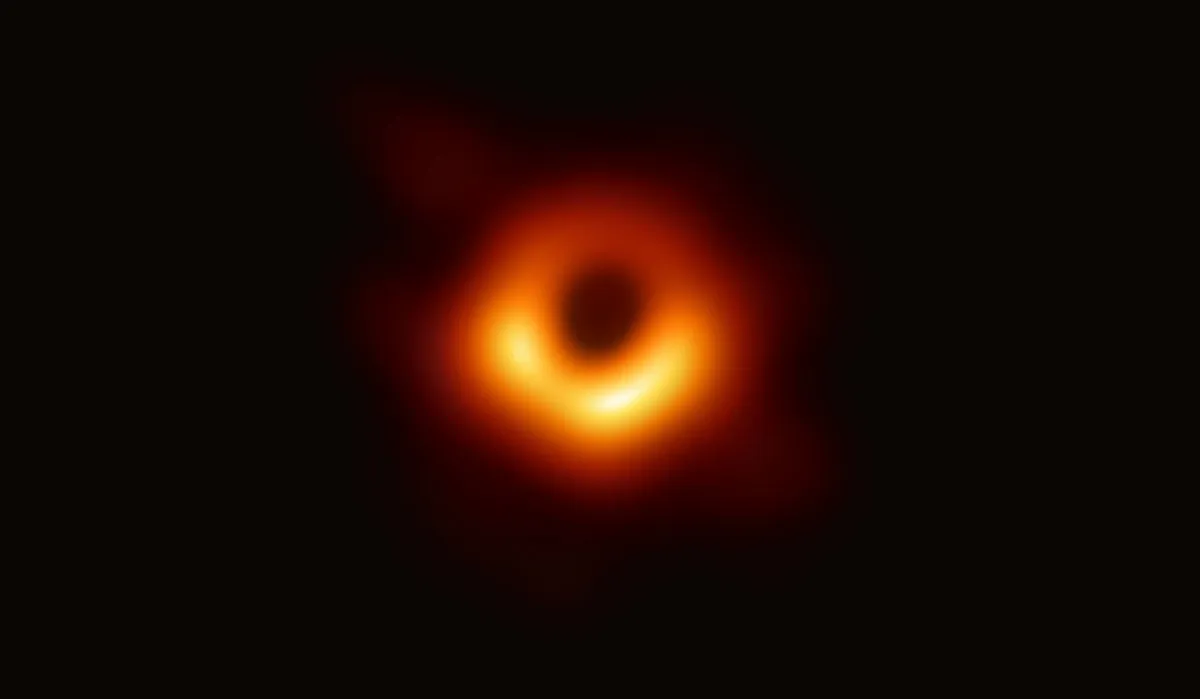
One mystery solved: a supermassive black hole was observed and imaged in galaxy M87 by the Event Horizon Telescope and announced to the world in April 2019. Credit: EHT Collaboration

When you read our roundup of the 9 biggest cosmic mysteries (no solutions guaranteed!) you’ll realise that one thing is very clear: the biggest mystery of all is the Universe itself.

Cosmologists are desperately trying to understand its birth, composition and destiny.

They’re certainly not there yet, although answers may well be within reach over the coming decades.

And by then, who knows what new mysteries we might have learned to ask.

In the meantime, here are 9 of the biggest mysteries concerning space, the cosmos, and just about everything in the Universe.

How do galaxies form?

A pair of ‘overlapping’ galaxies called NGC 3314. Credit: NASA, ESA, the Hubble Heritage (STScI/AURA)-ESA/Hubble Collaboration, and W. Keel (University of Alabama)

How do galaxies form? The simple answer is: through gravity. Primordial matter in the newborn Universe wasn’t spread out evenly.

Areas of slighter greater density attracted more matter and grew bigger over time; empty spaces grew emptier.

Thus, even though the Universe was expanding, matter was pulled into lumps that eventually grew into galaxies like our own Milky Way.

Cosmologists study the birth of galaxies in an expanding Universe by running huge computer simulations, like the giant ‘Millennium Run’ performed by Durham University scientists.

The statistics of the resulting galaxy distribution are then compared to the observed large-scale structure of the Universe.

The good news is that one particular model agrees very well with the real thing: a Universe in which most of the matter consists of dark particles that hardly interact with normal atoms.

The Antennae Galaxies. These two galaxies started to interact millions of years ago and will eventually merge together into one. Credit: NASA/ESA/Hubble Heritage Team (STScI/AURA)-ESA/Hubble Collaboration

According to this model, galaxies and clusters of galaxies should be interconnected by filamentary structures, and some observations seem to support this view.

However, there’s a catch.

The models also predict that big galaxies are surrounded by hundreds of smaller ones, and those are not observed.

Also, it’s unclear how the first massive galaxies could form so early after the Big Bang.

So the current picture may be incomplete after all.

Is our Solar System unique?

Artist's illustration showing a variety of exoplanets.
Credit: NASA/JPL-Caltech/Lizbeth B. De La Torre

It’s fascinating that this question can be asked at all. Until the mid-1990s, astronomers didn’t have a clue about the existence of other solar systems.

True, a handful of sterilized planets had been discovered orbiting pulsars – compact stellar corpses that emit copious lethal X-rays – but no one knew about planetary companions of Sun-like stars.

So has the question about the uniqueness of our Solar System been solved? In a way, yes: we now know that it is not the only one.

Astronomers now know of other Sun-like stars that are accompanied by one or more planets.

Artist's impression of a hot Jupiter; a gas giant similar to Jupiter but orbiting much closer to its host star. Credit: NASA/Ames/JPL-Caltech

Exoplanet hunters have encountered many strange exoplanets, including hot Jupiters that apparently spiralled inward into small and fast orbits, knocking other planets into highly elongated paths during the process, or kicking them out of the system altogether.

A small, Earth-like world in such a system would probably not survive this game of planetary billiards.

Thus, planets that are hospitable to life may well be less common than some people had imagined.

On the other hand, current telescopes are unable to detect a solar system like our own, although future ones should be able to do just that.

So in fact they may be pretty numerous. After all, nature never makes only one copy of anything.

Our Solar System may be rare, but it’s probably not unique. However, we won’t know the answer to this question for sure until a similar solar system is found.

What caused the Big Bang?

Did the Big Bang have a cause? This is one of the greatest mysteries in the Universe. Credit: Mark Garlick / Science Photo Library / Getty Images

This is a very suggestive question. To find out the cause of the Big Bang, you assume a prior event that apparently had a Universe-spawning effect.

But it’s not entirely clear if the word ‘prior’ has any meaning here.

Perhaps the Big Bang not only amounted to the creation of matter and energy, but also the origin of space and time itself.

In that case, it’s difficult to talk about a logical cause.

This is heavy philosophical stuff, so it’s hardly surprising that cosmologists have tried to circumvent the spontaneous creation of a Universe out of nothing.

Until recently, some scientists held the view that the Universe would someday recollapse, eventually leading to another bang.

But we’ve since learned that the current expansion of the Universe will probably never stop, so that idea fell out of favour.

Instead, some physicists suggest that the Big Bang was caused by our empty four-dimensional spacetime colliding with another universe that floats next to ours in a higher-dimensional ‘bulk space’.

Even more mind boggling is this: if something caused the Big Bang, what caused the cause?

How will the Universe end?

How the Universe will end is one of the biggest mysteries that may never be solved. Credit: CTIO/NOIRLab/DOE/NSF/AURA/STScI, W. Clarkson (UM-Dearborn), C. Johnson (STScI), and M. Rich (UCLA)

Maybe it won’t. People die, planets erode, stars explode, and even black holes evaporate, but the Universe may live forever.

Already, the cosmic baby boom – when the stellar birth rate in the Universe was at its peak – is distant history, and it will be another hundred billion years or so until star formation in many galaxies dwindles down almost completely.

But what about the Universe as a whole?

Since the discovery, in 1998, of a mysterious acceleration in the expansion rate of the Universe - known as dark energy - many astronomers believe that it will never slow down, let alone revert to a contracting phase.

So in the distant future, galaxies will increasingly recede from each other.

Eventually, they will disappear beyond each other’s cosmic horizon, and the Universe will be a dark and lonely place.

The mystery is in the precise sequence of events. Maybe all elementary particles are unstable in the very long run, and matter will completely cease to exist.

Also, the mysterious dark energy that drives the acceleration of the Universe might become stronger with time, leading to a ‘Big Rip’ when space itself is torn asunder.

Was Einstein wrong?

Einstein's theories of spacetime revolutionised our understanding of the Universe. Credit: Bettmann / Getty Images

Let’s begin with another question: was Isaac Newton wrong? His theory of gravity is accurate enough to fly spacecraft to the Moon, but it breaks down at extremely high speeds or in very strong gravitational fields.

That’s where Einstein’s theory of General Relativity is a better alternative.

It correctly describes the bending of starlight by gravity, the orbital decay of binary pulsars and the warping of spacetime around a black hole.

That’s why General Relativity is currently physicists’ best theory of gravity (for more on this read our guide to the difference between Newton and Einstein gravity)

So why are we asking this question at all? It’s because history may well repeat itself.

Physicists might discover small effects that would hint at an even better theory of gravity.

The Pioneer-10 spacecraft, ready to launch on board the Atlas-Centaur launch vehicle, 26 February 1972. Credit: NASA/Ames Research Center

In fact, the unexplained deceleration of spacecraft like Pioneer 10 and 11, which slowed down more than would be expected from the combined gravity of the Sun and planets, has been interpreted as evidence for new physics.

Using spacecraft telemetry and astronomical observations, many sensitive tests of General Relativity have been carried out over the past years and decades.

Einstein has passed all of those tests with flying colours, but physicists will keep putting his theory on the rack.

One day it may even fail, being shown to be not wrong, as such, but simply incomplete.

Could the Universe have been different?

A small change in the Universe could render it completely different: even lifeless. Credit: Mark Stevenson/UIG

Our material Universe consists of elementary particles, governed by the four forces of nature.

Physicists can measure particle properties like the mass ratio between protons and electrons; they can study the strength and behaviour of gravity, electromagnetism and the two nuclear forces; and they can determine a host of physical constants, like the speed of light.

But no one knows why all those values are what they are. So why is the Universe the way it is, and could it have been different?

One thing is clear: you shouldn’t twiddle too much with the knobs and dials of the cosmos.

Just a slight change in the mass or charge of a particular type of particle, or a tiny increase in the strength of one of nature’s forces, would render the Universe devoid of stars, planets and life.

It looks as if nature has been tweaked to produce complexity – as if the Universe has been fine-tuned for the emergence of life.

This raises an interesting puzzle. If the fundamental properties of the Universe are the chance outcome of a random process, it seems like an uncanny coincidence that the result would be so special.

How likely is it that a planet teaming with life like Earth would exist in any variation of our Universe? Credit: NASA / restored by Toby Ord

After all, if you buy only one lottery ticket, it’s highly unlikely to be the winning one.

On the other hand, if some yet-to-be-discovered Theory of Everything allows only one possible Universe, it’s unclear why that unique solution would have to be a life-spawning one.

The multiverse would be a possible solution to this mystery.

In the multiverse theory, our Universe is just one of a huge ensemble of many possible universes.

If this seems far-fetched, recall that people have balked at similar ideas before, when the uniqueness of the Earth, the Sun and the Milky Way was put into question.

If there are zillions of universes, all possible combinations of natural constants, particle properties and strengths of forces could occur somewhere.

Of course, we necessarily find ourselves in a Universe that allows for the origin of life.

Then again, if you feel uncomfortable with the multiverse idea, you’re in good company.

Some astronomers say that because it’s an untestable idea, it’s not even science.

Did inflation happen?

Much of the Universe’s expansion occurred a fraction of a second after the Big Bang, during inflation, and the initial positions of all the matter in the Universe are imprinted on its afterglow. Credit: NASA

This might be an easy question for an economist, but it’s tough for a cosmologist.

The theory says that inflation was an extremely brief burst of exponential growth at the start of the Universe.

Within a tiny fraction of a second, the Universe doubled its size a hundred times in succession before settling down in the much more sedate expansion it has experienced ever since.

But did it happen?

Inflation was greeted by cosmologists as a welcome solution to a nagging problem: how could the Universe be so homogeneous if remote parts were never in touch with each other?

The answer: before it blew up from the size of a subatomic particle to the size of a grapefruit, our observable Universe – now some 27 billion lightyears across – was small enough for any inhomogeneities to be ironed out.

Moreover, inflation explained why the large-scale curvature of our Universe appears to be zero.

Despite this theory, there’s very little direct evidence for inflation.

Is there life beyond Earth?

Hubble Ultra-Deep Field 3, June 2014. Virtually every point of light in this image is a galaxy, each composed of billions of stars. Credit: NASA, ESA, H. Teplitz and M. Rafelski (IPAC/Caltech), A. Koekemoer (STScI), R. Windhorst (Arizona State University), Z. Levay (STScI)

No matter how improbable the origin of life on Earth may have been, there should, theoretically, be many other ‘living’ planets in the Universe.

The argument goes like this: there are about a hundred billion galaxies in the observable Universe, each containing tens of billions of stars.

Many of these stars have planets, so even if life only forms on one planet out of every trillion, the number of life-bearing planets in the Universe is in the order of one billion.

Of course, the tantalising question of whether or not there’s life beyond Earth will only be answered if and when we find it.

In our own Solar System, a few locations appear to be hospitable to microbial life: the planet Mars, the subsurface ocean of Europa - one of Jupiter's Galilean Moons - and maybe the warm interior of Saturn’s satellite Enceladus.

A view of Enceladus’s south pole. Fissures along the moon's linear depressions, known as 'tiger stripes', emit icy particles, water vapour and organic compounds from the moon's surface. Credit: NASA/JPL/Space Science Institute

The discovery of Martian bacteria, either extant or extinct, would immediately tell astrobiologists that life is extremely common in the Universe.

So far, however, nothing has been found, although there’s plenty of evidence that Mars was warmer and wetter in its distant past.

Casting their nets a bit wider, astronomers are just starting to sniff out the atmospheres of exoplanets.

If a planet’s atmosphere turns out to contain substantial quantities of oxygen and methane, it’s almost certain it must have living organisms on its surface.

On Earth, it took billions of years for life to evolve from single-cellular organisms to anything bigger than the full stop at the end of this sentence.

Looking for microbial life may therefore give us the best chance of success.

On the other hand, that restricts the search to planetary systems in our immediate neighbourhood.

That’s why some researchers are trying to eavesdrop on the radio communications of alien civilisations. If they exist, they could be picked up from the other side of the Milky Way.

Radio telescope pointing at the sky
Credit: maxwellcitizenkepler / Getty

However, this Search for Extra-Terrestrial Intelligence (SETI) assumes that the biological evolution of life necessarily leads to intelligence and technology.

Ask an evolutionary biologist and they might well laugh in your face, because evolution has no built-in goals.

Moreover, as Italian physicist Enrico Fermi once remarked: "here are they?". This is known as the Fermi Paradox: if alien civilisations are so abundant, ET should have found and visited us long ago.

For now, no matter how likely the existence of extraterrestrial life seems, is still an unproven hypothesis.

And that probably won’t change anytime soon.

It’s a funny question too, because there’s no way to disprove the idea. As long as nothing has been found, some people will always believe they haven’t looked hard enough.

What is the Universe made of?

A view of the cosmic web. Credit: Millenium Simulation Project

The short answer is very simple: no one knows. The familiar matter that we do know about – atoms and molecules – is just the tip of an enormous iceberg.

By far the largest amount of matter is dark and consists of unknown particles. If that wasn’t mysterious enough, the vacuum of empty space is filled with a mysterious dark energy that accelerates the expansion of the Universe.

We’re not only blind to the bulk of the iceberg, we also fail to understand the dark ocean in which it floats.

Dark matter reveals its presence by its gravitational influence.

This can be seen in observations of the rotational velocities of galaxies, the motions of those galaxies in giant clusters, and the way the gravity of the clusters bends the light from background objects (observed during gravitational lensing).

Gravitational lensing caused by foreground galaxy cluster MACSJ0138.0-2155 brings far-distant galaxy MRG-M0138 into view. Credit: ESA/Hubble & NASA, A. Newman, M. Akhshik, K. Whitaker

All suggest that the total amount of matter in the Universe is about 30 times more than what can be seen with telescopes.

So could dark matter be accounted for by dim stars, cold gas clouds and black holes?

Unfortunately not. If all the dark matter were composed of baryons (protons and neutrons that make up atomic nuclei), the Universe would look pretty different.

With so many baryons around, the nuclear fusion reactions that occurred during the Big Bang would have produced a different mix of elements, with much less deuterium (heavy hydrogen) than is observed.

So if you accept the Big Bang theory, there’s no way out. The vast majority of the material content of the Universe really is composed of mysterious non-baryonic particles.

And then there’s dark energy. A catchy name, but no one knows what it is. In 1998, astronomers discovered that the current expansion rate of the Universe is larger than it was a few billion years ago.

Illustration showing the expansion of the Universe from the Big Bang to the present day.Credit: Andreus / iStock / Getty Images Plus

Apparently, the expansion of the Universe is speeding up, despite the mutual gravitational attraction of galaxies that is expected to slow it down.

Dark energy, which can be thought of as being like the repulsive force of empty space, is held responsible for this acceleration.

So there you have it: the ‘concordance model’ of cosmology. Some 70% of the full content of the Universe consists of dark energy; the remaining 30% is matter.

But only a small part of this matter (4% of the total content of the Universe) is composed of ‘ordinary’ particles, and at most one quarter of this baryonic matter (1% of the grand total) is visible to us as stars and gas clouds.

It’s a weird tale, that’s for sure. Still, most cosmologists are happy with the concordance model.

It explains most of the characteristics of the Universe, and it appears to be supported by a wide variety of observations, such as detailed temperature maps of the cosmic microwave background radiation (the ‘afterglow’ of the Big Bang) and 3D maps of the spatial distribution of galaxies.

All of the jigsaw pieces appear to fit nicely; the only problem is that nobody knows what the puzzle represents.

The make- up of the Universe is one of astronomy’s biggest mysteries

Featured Post

Biggest mysteries in the Universe

The Universe is a mysterious place. Here are some of the biggest mysteries, quandaries and secrets about space that remain unsolved.   From ...

Contact Form

Name

Email *

Message *

hilltopads_vast3

Autoplay VAST 3.0 Ad

surfepro_mobile